
Discover
The Landscape
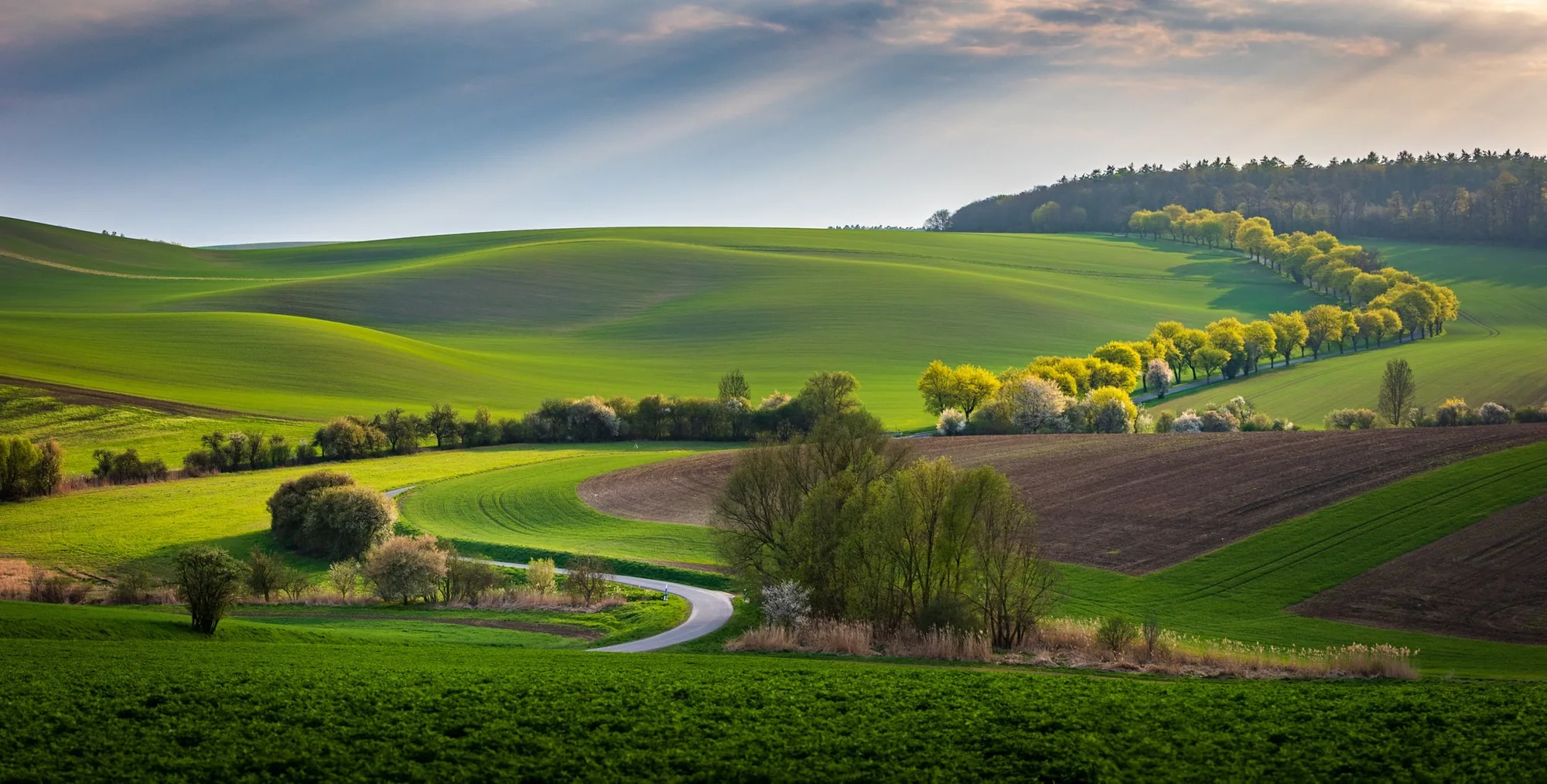
With its rolling green fields, sweeping agricultural lines, and dramatic terrain, the South Moravian countryside feels like a living painting. It is no surprise that this incredibly unique area has rightfully earned its famous nickname. The Moravian Tuscany landscape is renowned as one of the most photogenic places on Earth, drawing nature lovers, travelers, and visual artists from every corner of the world to witness its magical waves.
What makes this region so extraordinary is its purely agricultural character. Unlike other famous European destinations where hills are divided by fences, roads, or houses, here you will find nothing but vast, uninterrupted waves of soil and crops. It is a minimalist paradise where solitary chapels, old windmills, and small groups of deer create breathtaking focal points against the endless patterns of the earth.
Iconic Viewpoints and Hidden Secrets
While the entire region offers beautiful vistas, there are several iconic spots that you simply cannot miss. Exploring the countryside allows you to discover the famous rolling hills in Šardice, the solitary chapel near Stavěšice, the perfectly symmetric rows of chestnut trees near Karlín, or the sweeping panoramic views near the town of Kyjov.
However, the true magic of exploring the region lies in leaving the main roads behind. Walking along the quiet dirt paths between the fields reveals hidden perspectives, unexpected wildlife, and peaceful corners where you can enjoy the view in absolute silence. It is a landscape that demands you to slow down, breathe in the fresh country air, and truly connect with the rhythm of nature.
Experience the Waves Beyond Photography
Although it is a world-class destination for visual artists, this terrain has so much more to offer than just a beautiful view through a camera lens. The rolling hills provide a wonderful backdrop for a variety of unforgettable outdoor adventures.
The best way to experience this unique environment is to combine your sightseeing with active movement. The area is interwoven with excellent trails that are perfect for hiking and cycling. After a rewarding day of exploring the panoramic ridges and historical monuments, you can seamlessly transition into enjoying the incredible local culture. We highly recommend checking out our comprehensive guide to the best things to do in Moravian Tuscany, where you can discover premium local wine tastings, traditional village folklore, and relaxing wellness spots that will make your journey complete.
Explore the stunning Moravian Tuscany Landscape famous for its rolling hills, wavy vineyards and open skies
Some places are meant to be seen, but Moravian Tuscany is a place to be felt. It’s a landscape defined by rolling hills that stretch toward soft horizons and vineyards that draw elegant, rhythmic lines across the earth. Unlike dramatic mountain ranges, this scenery doesn’t overwhelm you. Instead, it invites you to slow down and breathe.
Here, the light plays the leading role. Whether it’s the morning mist softening the contours of the fields or the golden hour transforming the hills into a living painting. With every passing season, the landscape finds a new way to express itself. Whether you are a traveler, a photographer, or someone simply seeking a moment of calm, you will find something rare here: space, silence, and authentic beauty.
Science Meets Beauty in Nature…How Was This Landscape Formed?
Geological Origin: How Was This Formed?
Many visitors wonder about the fascinating history behind these perfect geometric formations. How was this formed? The unique shape of the terrain dates back millions of years to the Neogene period, when the area was covered by a prehistoric sea. As the water gradually receded, it left behind thick layers of soft marine sediments, sand, and clay, creating a very specific geological foundation.
Over millennia, powerful wind erosion and rainwater gradually carved deep into these soft sedimentary layers. Winds blowing from the nearby lowlands deposited rich layers of fertile loess soil across the slopes. The combination of these natural forces created the fluid, wave-like ridges we see today. Local farmers then spent generations working along the natural contours of the hills, naturally emphasizing the deep lines and shapes of the Moravian Tuscany landscape through traditional, respectful agriculture.
Erosion played a key role – rain, streams, and seasonal changes gradually carved the land into its present form, creating soft curves rather than sharp mountains.
Human Activity
Human activity has also influenced the landscape. For centuries, agriculture and vineyard cultivation have refined its structure, enhancing the natural lines and patterns that define its unique visual character.
In and around the village of Šardice, the heart of Moravian Tuscany, and in the surrounding area, the landscape was also touched by mining activity, especially lignite, or brown coal, mining. Although less visible today than the vineyards and fields, this industrial past left subtle traces in the terrain and became part of the area’s layered history.
Over time, many of these places were reclaimed, softened by nature, and gradually reintegrated into the surrounding agricultural landscape.
What we see today is a balance between nature, tradition, and human history. A landscape shaped slowly, and still evolving.
The Seasons of Moravian Tuscany
The landscape offers a different face every month. In spring, the fields are a vibrant, almost neon green, and the air is filled with the scent of blooming fruit trees. Summer brings golden wheat fields that contrast beautifully with the deep green of the vineyards. Autumn is perhaps the most dramatic, as the morning mists settle in the hollows and the vines turn fiery shades of orange and red. Even in winter, the landscape remains captivating; when covered in light snow, the “waves” become a minimalist black-and-white masterpiece.
Tips for Visiting Respectfully
Because this breathtaking terrain is made up of active, working agricultural fields, protecting the environment is essential. When you visit to admire or photograph the scenery, always stay on the marked public paths and avoid walking directly into the crops. By respecting the hard work of our local farmers, we can ensure that this magnificent countryside remains pristine and beautiful for generations to come.